

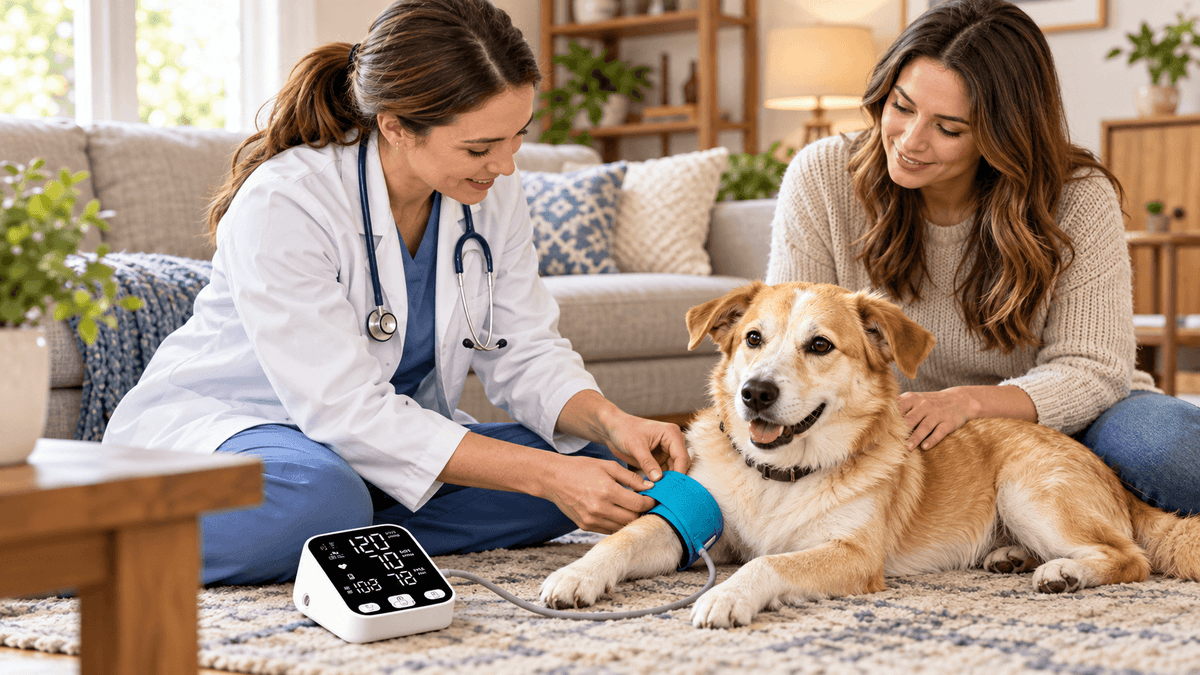
How to Measure Your Dog’s Blood Pressure at Home
Learning how to measure your dog’s blood pressure at home can help you monitor changes over time and share useful information with your veterinarian. For dogs with certain health conditions, regular blood pressure checks may be part of a veterinary monitoring plan. However, getting a meaningful reading requires the right equipment, a properly fitted cuff, a calm environment, and a consistent technique.
In this guide, you will learn how to prepare your dog, choose a suitable Dog Blood Pressure Monitor, take a reading, understand common measurement problems, and decide when to contact your veterinarian.

Can You Measure Your Dog’s Blood Pressure at Home?
Yes, home blood pressure monitoring may be possible with an appropriate veterinary-use device and guidance from your veterinarian. It can help you collect readings in a familiar environment, where some dogs may feel less anxious than they do at a veterinary clinic.
However, not every blood pressure monitor is designed or validated for dogs. Human blood pressure monitors should not automatically be assumed to provide reliable readings in pets. Dogs differ in limb size, anatomy, temperament, and tolerance of the measurement process.
A Pet Blood Pressure Monitor may be useful for tracking readings over time, but home measurements do not replace veterinary examinations or a professional diagnosis. Ask your veterinarian which device and measurement method are appropriate for your dog.
What You Need Before Measuring Your Dog’s Blood Pressure
Prepare the following items before starting:
- A suitable blood pressure monitor: Choose a device intended for veterinary use and follow its instructions.
- The correct cuff size: The cuff must fit the measurement site properly. A cuff that is too small or too large can affect the reading.
- A quiet, comfortable space: Choose a familiar room away from loud noises and other pets.
- A notebook or digital record: Record readings, measurement times, cuff size, and the location where the cuff was placed.
- Optional rewards: Small treats and gentle praise may help your dog remain relaxed, provided treats are appropriate for your dog's health needs.
If your dog has never had a blood pressure measurement before, ask your veterinarian to demonstrate the technique and confirm the appropriate cuff, measurement site, and device settings.

Step 1: Help Your Dog Relax Before Measuring
Your dog’s emotional state can influence blood pressure. Excitement, fear, movement, and unfamiliar surroundings may produce readings that do not accurately reflect your dog's usual resting blood pressure.
- Choose a quiet room with minimal distractions.
- Allow your dog to settle comfortably before starting. Veterinary consensus guidance recommends an acclimation period of approximately 5–10 minutes before measurement.
- Keep your voice calm and avoid forcing your dog to remain in a position that causes distress.
- Wait until your dog is relatively calm and still before taking a reading.
Helpful tip: If your dog is panting heavily, struggling, barking, or repeatedly trying to move away, pause and try again later. Do not restrain your dog forcefully just to obtain a number.
Step 2: Choose the Correct Cuff Size
Cuff size is one of the most important factors in obtaining useful blood pressure measurements. A cuff that is too narrow may produce an artificially high reading, while an unsuitable oversized cuff may affect the result in the opposite direction.
Veterinary guidelines generally recommend a cuff width of approximately 30%–40% of the circumference of the measurement site, although the exact recommendation depends on the site and measurement method. Always follow the device manufacturer's instructions and your veterinarian's advice.
Before measuring:
- Measure the circumference of the intended site if required by the device instructions.
- Select a cuff that matches the measurement range, not simply your dog's overall body size.
- Make sure the cuff fits securely without being excessively tight.
- Use the same cuff size and measurement site for future readings whenever possible.
Some dogs need different cuff sizes depending on their body shape and the site selected. A monitor supplied with multiple cuff sizes may offer more flexibility, but you should still verify that the available cuffs are appropriate for your dog.
Step 3: Position the Cuff Correctly
Depending on the device and veterinary instructions, blood pressure may be measured at an appropriate limb or at the tail. Not every monitor supports every measurement site, so check the manual before placing the cuff.
- Position your dog comfortably, with as little movement as possible.
- Place the cuff at the approved measurement site specified by your veterinarian and the device manufacturer.
- Ensure the cuff is snug and correctly aligned according to the device instructions.
- Keep your dog's body position consistent between measurements.
- Make sure the cuff is not twisted, folded, or slipping during measurement.
The height of the measurement site relative to the heart can influence blood pressure readings. Ask your veterinarian to show you the appropriate position for your particular device and dog.
Step 4: Take the Blood Pressure Reading
Once your dog is calm and the cuff is correctly positioned, follow the monitor's instructions to begin measurement. Avoid talking, petting, or moving your dog unnecessarily while the device is operating.
- Turn on the Dog Blood Pressure Monitor and confirm that it is ready to use.
- Check that the cuff and tubing are connected correctly, if applicable.
- Start the measurement according to the device instructions.
- Wait for the measurement to finish before moving the cuff or your dog.
- Record the displayed result and any relevant observations, such as movement or anxiety.
Depending on the monitor, the display may show systolic blood pressure, diastolic blood pressure, and pulse rate. Some veterinary measurement methods provide only a systolic reading. Check the user manual to understand which values your device reports.
Step 5: Repeat the Measurement and Record the Results
A single reading may not represent your dog's usual blood pressure. Movement, anxiety, cuff placement, and natural variation can all affect the result.
Veterinary consensus guidance recommends standardized measurements and recording multiple consistent readings. Its clinical protocol generally excludes the first reading and uses a series of consistent subsequent measurements to calculate an average. The exact procedure for a home device may differ, so follow your veterinarian's instructions and the device manual.
For more useful records:
- Keep your dog calm between measurements.
- Repeat measurements only as recommended for your device.
- Record the individual readings rather than saving only the highest or lowest number.
- Note the cuff size, measurement site, time, and your dog's behavior.
- Share the results with your veterinarian for interpretation.
If the readings vary widely, do not keep measuring indefinitely or select the number that looks most reassuring. Check the cuff position and your dog's comfort, then contact your veterinarian for advice if the results remain inconsistent.
How to Understand Your Dog’s Blood Pressure Results
Blood pressure readings in dogs are influenced by several factors, including stress, age, underlying health conditions, body position, measurement technique, and the type of equipment used. There is no single reading that can reliably determine every dog's health status.
Your veterinarian may consider:
- Systolic blood pressure: The pressure when the heart contracts.
- Diastolic blood pressure: The pressure when the heart relaxes, when the device provides this value.
- Pulse rate: The number of heartbeats per minute, if displayed by the monitor.
- Trends over time: Changes across repeated measurements taken under comparable conditions.
- Your dog's overall health: Symptoms, medical history, medications, and any underlying disease.
Do not diagnose hypertension or change your dog's medication based on a home reading alone. Your veterinarian should interpret the measurements in the context of your dog's health and may recommend repeat measurements or additional testing.
What Should You Do If Your Dog’s Blood Pressure Reading Is High?
An unexpectedly high reading does not always mean your dog has persistent hypertension. Stress, movement, an incorrect cuff size, or improper positioning can affect the result. However, persistently elevated blood pressure can be associated with significant health problems and should not be ignored.
If you obtain a higher-than-expected result:
- Check that the cuff size and placement are correct.
- Allow your dog to settle if they appear anxious or restless.
- Repeat the measurement according to the device instructions and your veterinarian's guidance.
- Record the readings and contact your veterinarian for interpretation.
Seek urgent veterinary care if your dog develops sudden vision changes or blindness, seizures, collapse, severe disorientation, or other sudden serious symptoms. Do not delay care while attempting repeated home measurements.
Common Mistakes to Avoid When Measuring Your Dog’s Blood Pressure
- Using an unsuitable monitor: A device designed for humans may not be appropriate for dogs.
- Choosing the wrong cuff: Incorrect cuff sizing can distort results.
- Measuring while your dog is anxious: Stress and movement can make readings less representative.
- Changing the measurement site every time: Different sites and positions may produce different results.
- Relying on one reading: A single number may be affected by temporary conditions.
- Ignoring device instructions: Measurement methods vary between monitors.
- Making treatment decisions independently: Medication changes and diagnosis should be handled by a veterinarian.
How Often Should You Measure Your Dog’s Blood Pressure at Home?
The ideal monitoring schedule depends on why your dog's blood pressure is being checked. A dog with a diagnosed condition or a treatment plan may need a different schedule from a dog whose veterinarian has recommended occasional monitoring.
Ask your veterinarian to specify how often to measure, how many readings to take per session, what results should prompt a call, and how to report the measurements. Consistency is important: use a similar environment, position, cuff, and measurement site whenever possible.
How to Choose a Dog Blood Pressure Monitor
When comparing a Dog Blood Pressure Monitor or Pet Blood Pressure Monitor, focus on whether the device suits your dog's size and your veterinarian's monitoring plan rather than choosing by appearance alone.
- Suitable cuff options: Check the cuff measurement range and whether the available sizes fit your dog.
- Clear display: A readable screen can make it easier to record the results correctly.
- Simple operation: Straightforward controls can help reduce handling time.
- Appropriate measurement method: Confirm that the device is intended for the animal and measurement site you plan to use.
- Clear instructions and support: Make sure you can access the operating instructions and get help when needed.
- Veterinary guidance: Ask your veterinarian whether the device is suitable for your dog's specific needs.
Remember that multiple cuffs, a digital screen, or stored readings do not by themselves establish clinical accuracy. Confirm the device's capabilities and limitations before relying on its results for health decisions.
Frequently Asked Questions
Can I use a human blood pressure monitor on my dog?
Do not assume that a human monitor will provide reliable results for a dog. Differences in anatomy, cuff fit, and measurement methods can affect readings. Ask your veterinarian to recommend a suitable veterinary-use device.
Where should I place the blood pressure cuff on my dog?
The appropriate location depends on the monitor and the measurement method. A limb or tail may be used with suitable equipment and technique. Follow the device instructions and ask your veterinarian to demonstrate the correct placement.
Why does my dog’s blood pressure reading keep changing?
Readings can vary because of stress, movement, cuff size, placement, body position, and normal biological variation. Keep the procedure consistent and discuss persistently inconsistent readings with your veterinarian.
Can I tell whether my dog has high blood pressure from one reading?
No. A single reading cannot reliably establish a diagnosis. Veterinarians interpret repeated measurements alongside the dog's condition, medical history, and the measurement method.
Do healthy dogs need regular blood pressure checks at home?
Not necessarily. Home monitoring is most useful when there is a specific veterinary reason to measure blood pressure. Your veterinarian can advise whether monitoring is appropriate for your dog.
Is a Pet Blood Pressure Monitor a replacement for a veterinary visit?
No. Home readings can support monitoring when used appropriately, but they do not replace a veterinary examination, diagnostic testing, or professional interpretation.

Explore a Pet Blood Pressure Monitor for Home Monitoring
If your veterinarian recommends home blood pressure monitoring, choosing a device with suitable cuff options and a clear display may help you establish a more consistent routine.
The YYY.LIFE Pet Blood Pressure Monitor with LCD Screen and Three Cuffs is one option to explore for dogs and cats. Review the product specifications, cuff sizing, operating instructions, and intended use to determine whether it fits your pet's needs. Consult your veterinarian before relying on home readings for clinical decisions.
You can also browse the full Pet Blood Pressure Monitor collection to compare available options.
Authoritative References
The following veterinary resources provide further information about measuring and interpreting blood pressure in dogs and cats:
- ACVIM Consensus Statement: Guidelines for the Identification, Evaluation, and Management of Systemic Hypertension in Dogs and Cats — Veterinary consensus guidance covering standardized measurement procedures, cuff selection, repeated readings, and interpretation.
- Merck Veterinary Manual: Systemic and Pulmonary Hypertension in Dogs and Cats — An overview of hypertension in pets, measurement considerations, and associated health conditions.
- PubMed: ACVIM Consensus Statement on Systemic Hypertension in Dogs and Cats — Bibliographic record for the veterinary consensus statement published in the Journal of Veterinary Internal Medicine.
Medical disclaimer: This article is for general educational purposes only and is not a substitute for veterinary advice, diagnosis, or treatment. Blood pressure measurements can be affected by the device, cuff fit, technique, and your dog's condition. Consult a licensed veterinarian about your dog's health and the interpretation of any home readings.


